Section
Lesson
Lesson
Lesson
Lesson
Lesson
Section
Lesson
Lesson
Lesson
Lesson
Lesson
Section 1
Lesson 1
Lesson 2
Lesson 3
Lesson 4
Lesson 5
Lesson 6
Lesson 7
Lesson 8
Lesson 9
Lesson 10 Lesson 11 Lesson 12
Lesson 13
Lesson 14
Lesson 15
Lesson 16
Section 3
Lesson 17
Lesson 18
Lesson 19
Lesson 20
Lesson 21
Lesson 22
Lesson 23
Lesson 24
Section 3
Lesson 25
Lesson 26
Lesson 27
Lesson 28
Lesson 29
Lesson 30
Lesson 31
Lesson 32
Lesson 33
Lesson 34
Lesson 35
Section 4
Lesson 36
Lesson 37
Lesson 38
Lesson 39
Chapter 1 is currently under production.
Chapters 2 and 3 are ready.
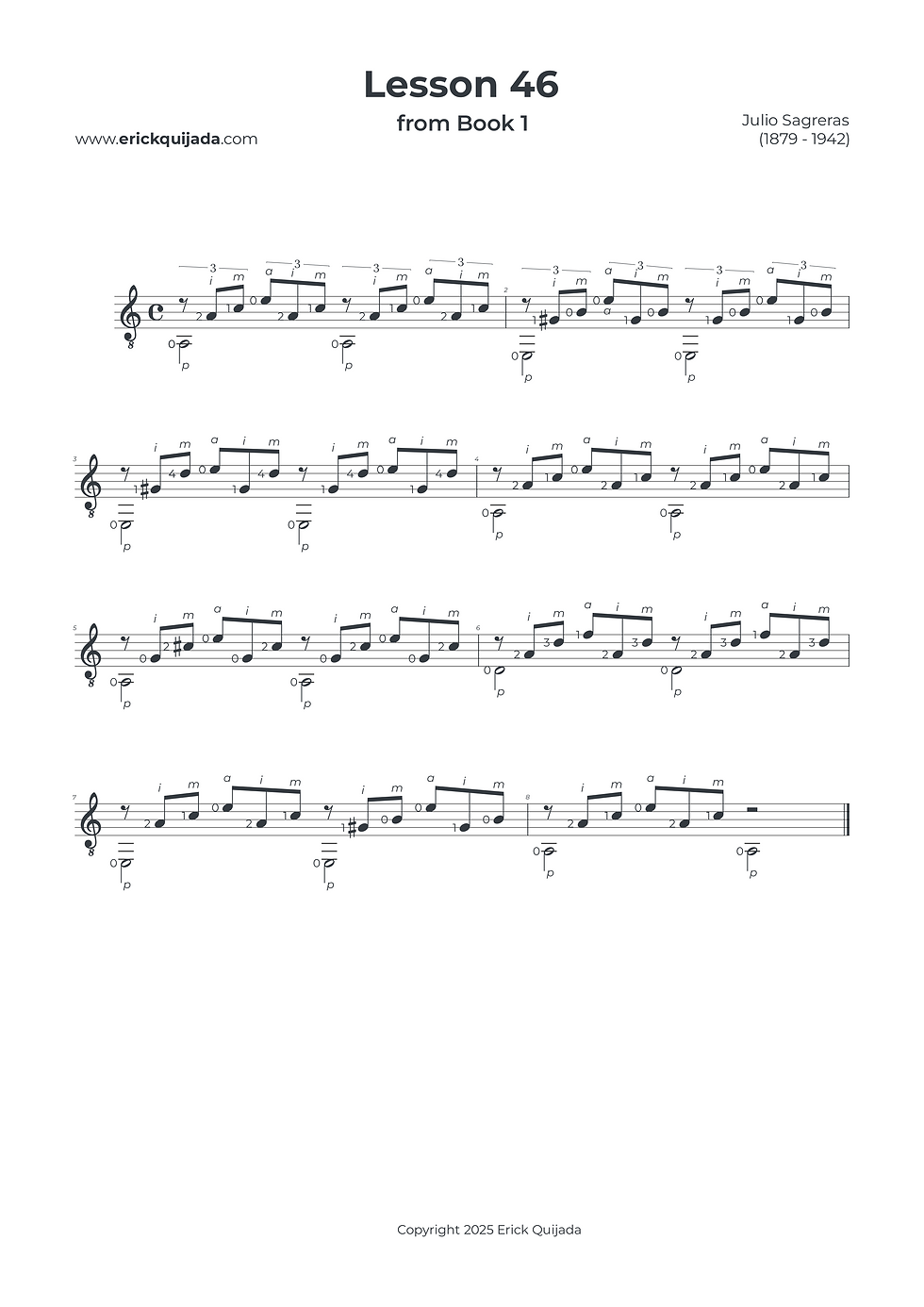
Lesson 46 | Arpeggio Dexterity & Six-Note Flow
Expand your technical flexibility by internalizing the continuous p-i-m-a-i-m circuit, refining the independence of all four right-hand fingers over a moving bass foundation.


Studio Insights
The "Default State" Principle
When you stop fretting a string, ensure your finger remains as close to the fretboard as possible. By making "proximity" the default state of your left hand, you minimize the friction of the reach and build the technical mastery required for high-speed accuracy.
The Precision Arpeggio Circuit
Your right-hand fingers should operate like a finely engineered machine. Keep the tips very close to the strings and use small, deliberate movements from the knuckles. Avoid "jumpy wrist syndrome"—by keeping the wrist stable, you ensure that the fingers alone drive the tone, resulting in a nuanced and consistent volume across the strings.
Strategic Finger Readiness
Prepare your fingers over strings 1, 2, and 3. This will create a stable foundation that allows the p-i-m-a pattern to flow without interruption.
The Play along
I've found that at the begining of the learning journey it can be very helpful to have a recording to follow along. Remember that you can easily change YouTube video playback speed on any device by clicking the settings gear icon, selecting Playback speed, and choosing a different speed from the menu, or even setting a custom speed.