Section
Lesson
Lesson
Lesson
Lesson
Lesson
Section
Lesson
Lesson
Lesson
Lesson
Lesson
Section 1
Lesson 1
Lesson 2
Lesson 3
Lesson 4
Lesson 5
Lesson 6
Lesson 7
Lesson 8
Lesson 9
Lesson 10 Lesson 11 Lesson 12
Lesson 13
Lesson 14
Lesson 15
Lesson 16
Section 3
Lesson 17
Lesson 18
Lesson 19
Lesson 20
Lesson 21
Lesson 22
Lesson 23
Lesson 24
Section 3
Lesson 25
Lesson 26
Lesson 27
Lesson 28
Lesson 29
Lesson 30
Lesson 31
Lesson 32
Lesson 33
Lesson 34
Lesson 35
Section 4
Lesson 36
Lesson 37
Lesson 38
Lesson 39
Chapter 1 is currently under production.
Chapters 2 and 3 are ready.
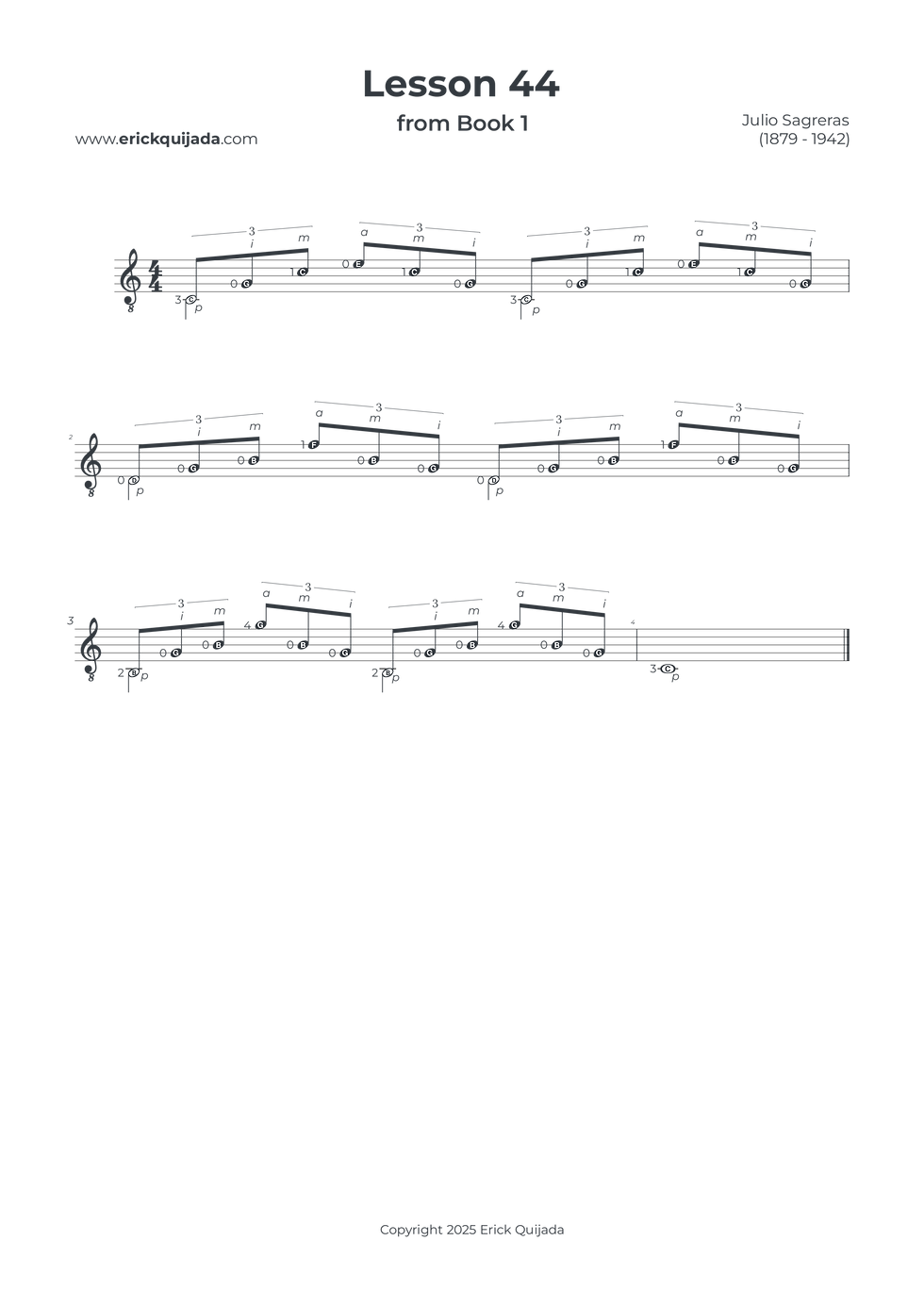
Lesson 44 | The p-i-m-a-m-i Arpeggio & Continuous Flow
Cross the threshold of four-finger coordination by mastering the p-i-m-a-m-i arpeggio circuit within the resonant landscape of C Major.


Studio Insights
Sub-Position Mapping
Don't view the left-hand chord as a single, heavy block. Break the full position down into two smaller sub-positions. By engineering your movement to prepare the second sub-position while the first is still sounding, you create a seamless transition and a more fluid musical blueprint.
The Quiet Wrist Architecture
Ensure your right-hand wrist remains stable and quiet; it should not "jump" with the notes. By keeping the wrist still, you allow the fingers alone to drive the pluck, which is the secret to achieving a professional, nuanced tone and effortless speed.
The Proximity Habit
Maintain a symmetrical hand posture by keeping all fingers—both left and right—close to the strings at all times. This minimizes the friction of travel time and provides the steady foundation needed for the complex p-i-m-a patterns to come.
The Play along
I've found that at the begining of the learning journey it can be very helpful to have a recording to follow along. Remember that you can easily change YouTube video playback speed on any device by clicking the settings gear icon, selecting Playback speed, and choosing a different speed from the menu, or even setting a custom speed.