Section
Lesson
Lesson
Lesson
Lesson
Lesson
Section
Lesson
Lesson
Lesson
Lesson
Lesson
Section 1
Lesson 1
Lesson 2
Lesson 3
Lesson 4
Lesson 5
Lesson 6
Lesson 7
Lesson 8
Lesson 9
Lesson 10 Lesson 11 Lesson 12
Lesson 13
Lesson 14
Lesson 15
Lesson 16
Section 3
Lesson 17
Lesson 18
Lesson 19
Lesson 20
Lesson 21
Lesson 22
Lesson 23
Lesson 24
Section 3
Lesson 25
Lesson 26
Lesson 27
Lesson 28
Lesson 29
Lesson 30
Lesson 31
Lesson 32
Lesson 33
Lesson 34
Lesson 35
Section 4
Lesson 36
Lesson 37
Lesson 38
Lesson 39
Chapter 1 is currently under production.
Chapters 2 and 3 are ready.
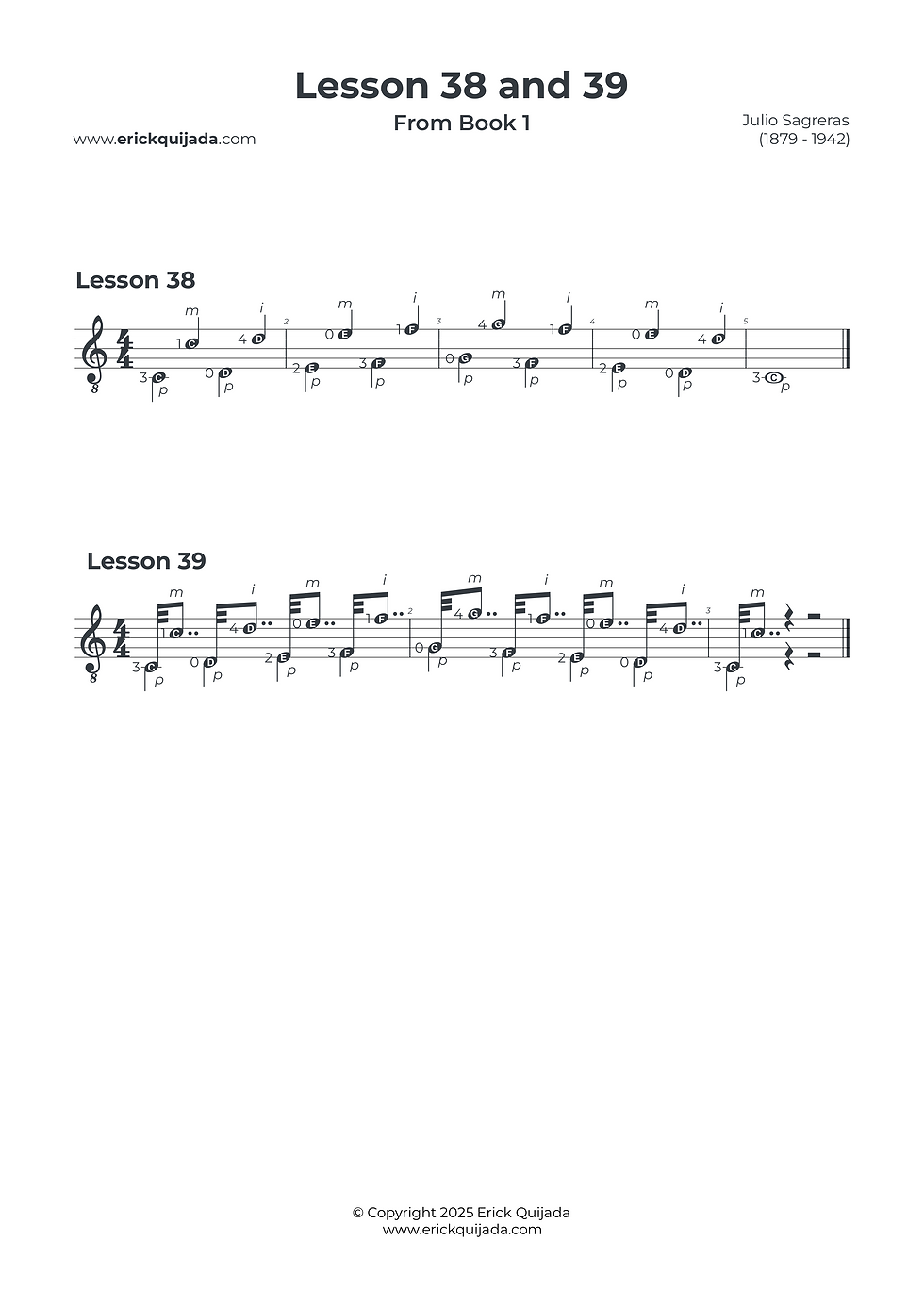
Lesson 38 & 39 | Mapping the First Position (part 10 of 10)
In these two lessons, we transition from linear lines into the world of polyphony—the ability to play independent bass and treble voices simultaneously. This is the indispensable skill to be able to play classical and fingerstyle guitar.


Studio Insights
📐 Octave Synchronization
Lesson 38 challenges your brain to process the same note across different pitches and octaves. This is a vital recalibration of your mental map, ensuring you see the fretboard not as isolated strings, but as a unified harmonic landscape.
⏳ Thumb Independence
The thumb acts as the "anchor" of your sanctuary. By training the thumb to pluck independently of the i-m alternation, you engineer the reflex needed for complex fingerstyle and classical masterworks.
🔔 Strategic Hovering Zones
Efficiency remains the priority. Keep fingers 1 and 4 stationed over the treble strings, while 2 and 3 monitor the bass. By maintaining these spatial zones, you eliminate the friction of large hand movements, allowing your reflexes to remain sharp and immediate.
The Play along
I've found that at the begining of the learning journey it can be very helpful to have a recording to follow along. Remember that you can easily change YouTube video playback speed on any device by clicking the settings gear icon, selecting Playback speed, and choosing a different speed from the menu, or even setting a custom speed.