Section
Lesson
Lesson
Lesson
Lesson
Lesson
Section
Lesson
Lesson
Lesson
Lesson
Lesson
Section 1
Lesson 1
Lesson 2
Lesson 3
Lesson 4
Lesson 5
Lesson 6
Lesson 7
Lesson 8
Lesson 9
Lesson 10 Lesson 11 Lesson 12
Lesson 13
Lesson 14
Lesson 15
Lesson 16
Section 3
Lesson 17
Lesson 18
Lesson 19
Lesson 20
Lesson 21
Lesson 22
Lesson 23
Lesson 24
Section 3
Lesson 25
Lesson 26
Lesson 27
Lesson 28
Lesson 29
Lesson 30
Lesson 31
Lesson 32
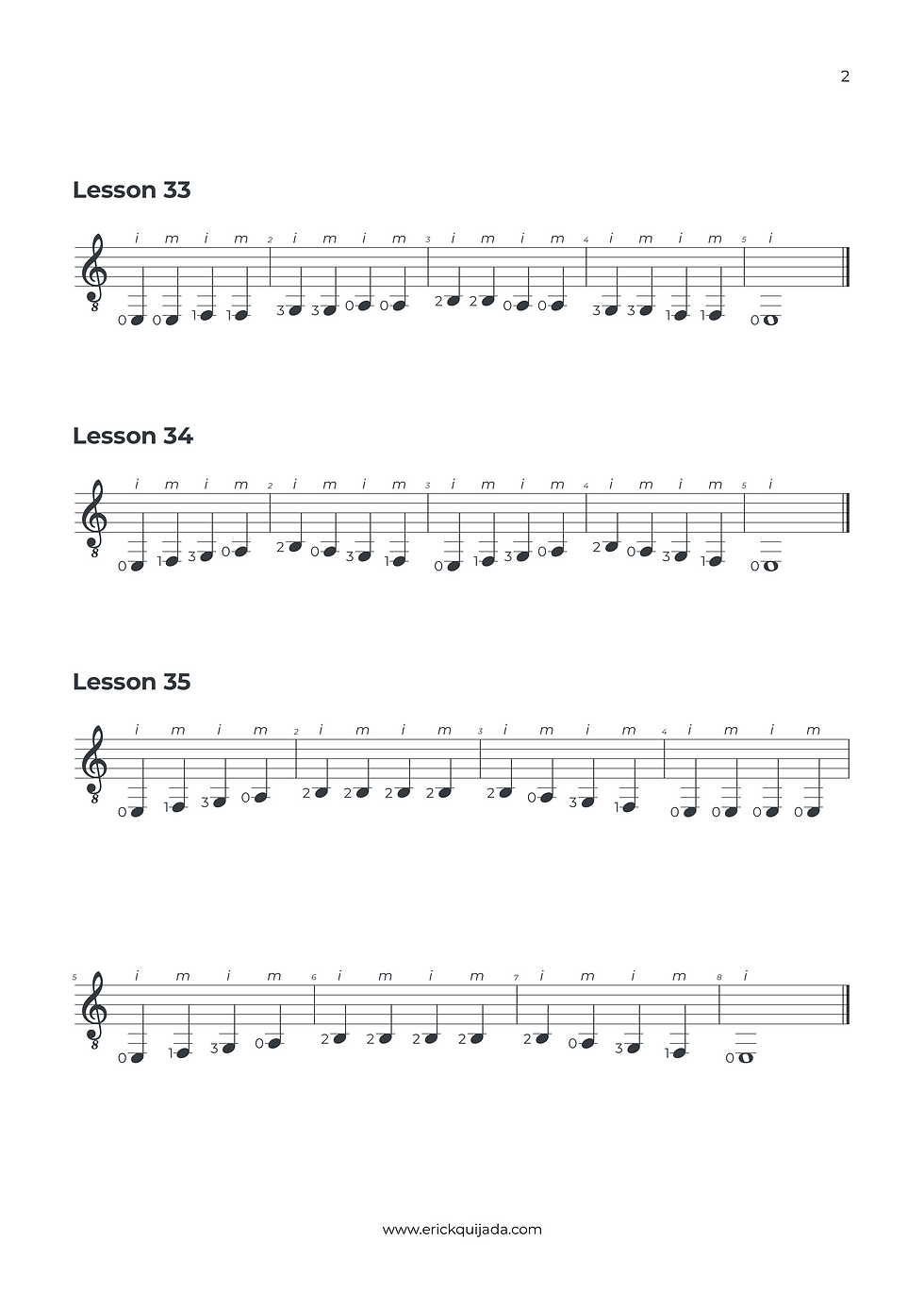
Lesson 33
Lesson 34
Lesson 35
Section 4
Lesson 36
Lesson 37
Lesson 38
Lesson 39
Chapter 1 is currently under production.
Chapters 2 and 3 are ready.
Lessons 31 to 35 | Mapping the First Position (part 7 of 10)
This group of lessons introduces four new notes and covers five notes in the first position.


Studio Insights
📐 The Stationary Guard System:
Efficiency is born from stillness. In this series, your fingers act as guards: Finger 1 handles the 1st fret, Finger 2 anchors the 5th string (2nd fret), and Finger 3 monitors the 6th string (3rd fret). By keeping them hovering over these specific coordinates, you eliminate the friction of searching for notes.
⏳ Low-Frequency Precision
The bass strings offer more surface area but require more nuance. Ensure you are still pressing directly behind the fret-wire. This placement allows the low E and F to vibrate with maximum resonance without requiring excessive grip strength.
🔔 The Right-Hand Engine
As we descend to the lowest strings, maintain your strict i-m alternation. Focus on the symmetry of your stroke; the transition from the thin trebles to the thick basses should feel seamless and mechanically identical.
The Play along
I've found that at the begining of the learning journey it can be very helpful to have a recording to follow along. Remember that you can easily change YouTube video playback speed on any device by clicking the settings gear icon, selecting Playback speed, and choosing a different speed from the menu, or even setting a custom speed.