Section
Lesson
Lesson
Lesson
Lesson
Lesson
Section
Lesson
Lesson
Lesson
Lesson
Lesson
Section 1
Lesson 1
Lesson 2
Lesson 3
Lesson 4
Lesson 5
Lesson 6
Lesson 7
Lesson 8
Lesson 9
Lesson 10 Lesson 11 Lesson 12
Lesson 13
Lesson 14
Lesson 15
Lesson 16
Section 3
Lesson 17
Lesson 18
Lesson 19
Lesson 20
Lesson 21
Lesson 22
Lesson 23
Lesson 24
Section 3
Lesson 25
Lesson 26
Lesson 27
Lesson 28
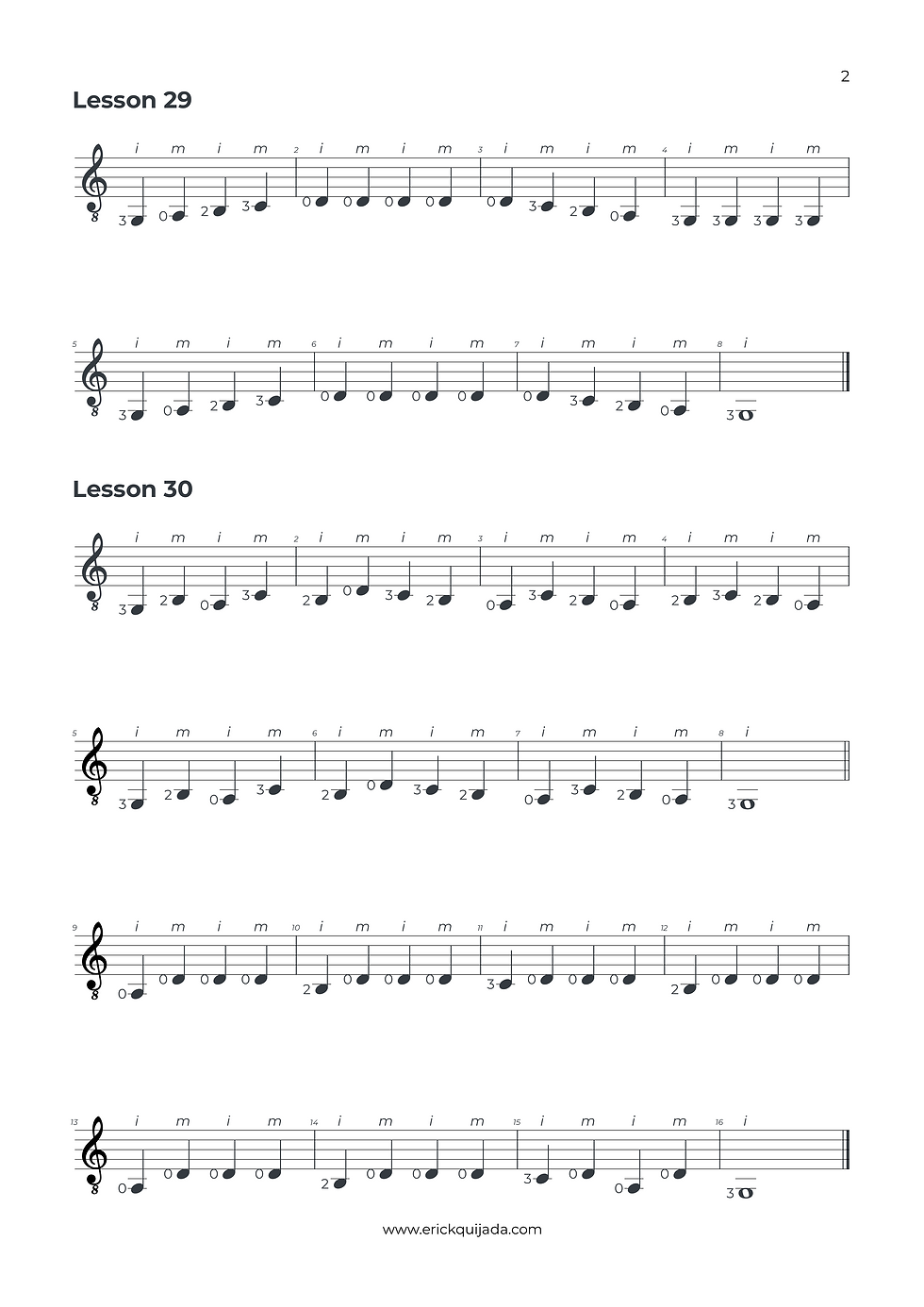
Lesson 29
Lesson 30
Lesson 31
Lesson 32
Lesson 33
Lesson 34
Lesson 35
Section 4
Lesson 36
Lesson 37
Lesson 38
Lesson 39
Chapter 1 is currently under production.
Chapters 2 and 3 are ready.
Lessons 25 to 30 | Mapping the First Position (part 6 of 10)
This group of lessons introduces three new notes and covers five notes in the first position.


Studio Insights
📐 The Stationary Anchor
Strategy is the key to effortless movement. In this sequence, Finger 2 is almost exclusively assigned to the 5th string, 2nd fret. By keeping this finger hovering exactly where it’s needed, you eliminate the friction of unnecessary motion and "save" energy for the more active fingers.
⏳ Vertical Rigidity
As the right hand moves to the lower strings, it’s easy for the wrist to "collapse." Maintain a strictly vertical plane of motion to ensure your i-m alternation remains symmetrical. This ensures the bass notes sound warm and intentional, not thumpy or accidental.
🔔 The Fret-Wire Logic
The thicker the string, the more important your placement becomes. Hitting the "sweet spot" right behind the fret-wire allows you to engineer a clear bass tone with minimal thumb pressure—protecting your hand from fatigue during longer practice sessions.
The Play along
I've found that at the begining of the learning journey it can be very helpful to have a recording to follow along. Remember that you can easily change YouTube video playback speed on any device by clicking the settings gear icon, selecting Playback speed, and choosing a different speed from the menu, or even setting a custom speed.